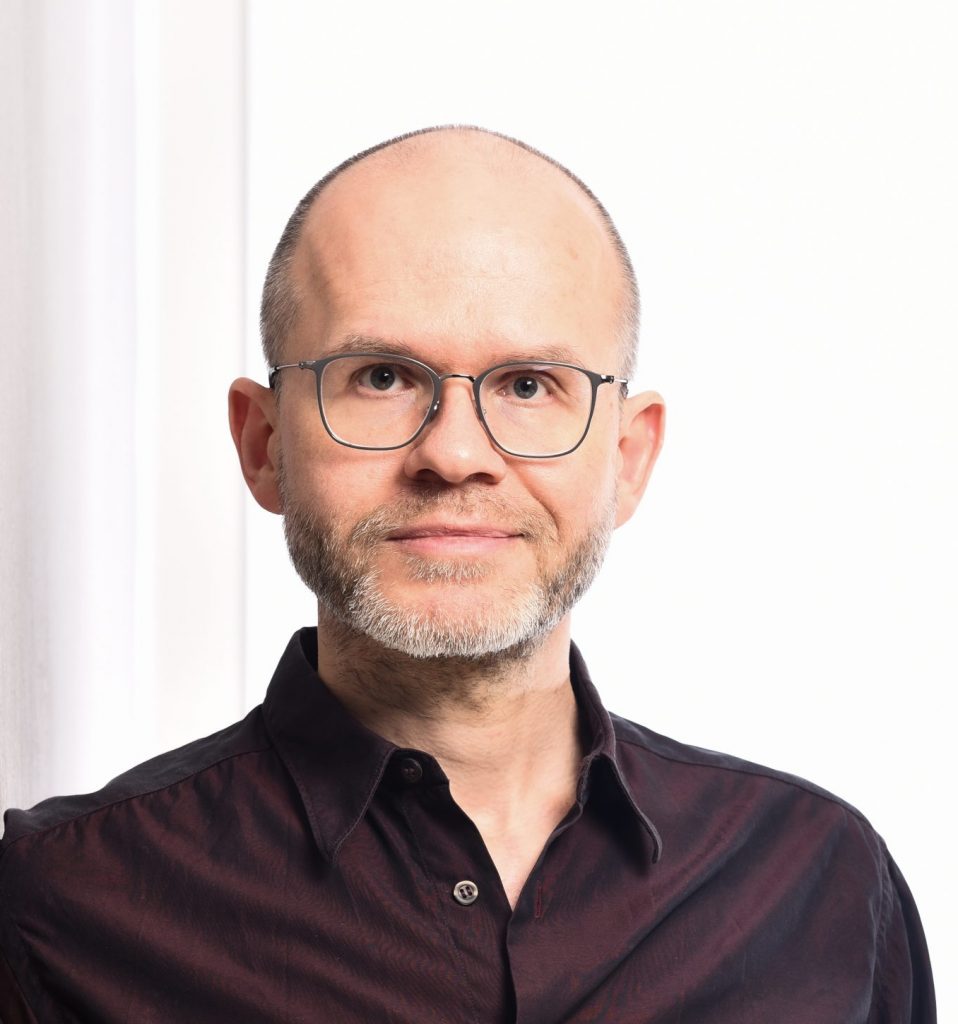
music therapist (nat. registry 210817) , Hochschullehrer
! Zum 1.7.26 sucht das Parkinson Center Beelitz-Heilstaetten / Germany eine/n Musiktherapeut*in. Hier ist die Stellenausschreibung. Bei Anfragen gern an: mainka @ kliniken-beelitz.de
- Deputy Head of Study Programme Master's degree in music therapy at the University of the Arts Berlin
- works in the Parkinson Center Beelitz-Heilstaetten / Germany
- Focus: sensor-based music feedback, therapeutic singing, rhythmic auditory stimulation (RAS) – gait training, music production: functional training music, Parkinson's disease, stroke
- operator of the information portal mit-musik-geht-reha-besser.de
- has developed significantly the Beelitzer music gymnastics, the Swallow Ringer and the App CuraSwing,, co-developed an application for therapeutic sensor-based music feedback
- representative of German Music Therapy Society in the German Umbrella Organisation for Music Therapy
- operates with the Stimmzirkel Potsdam a project on choral vocal improvisation
Contact: S.Mainka @ UdK-Berlin.de, also on research gate
___
Publications:
Peer-reviewed journals
Braune, K., Schaaf, T., Balzer, F., Bershtein, D.I., Broderick, A., Celik, P., Flügge, T., Kim, K.K., Lahmann, N., Lindemann, D., Mainka, S., Mérillat, S., Pohle,J., Schildhauer, T., Martin, M. (2026). Digital technologies for healthy longevity: A policy agenda from the Einstein circle on inclusive, data-driven ageing societies. Ageing Research Reviews 120, https://doi.org/10.1016/j.arr.2026.103217.
Mainka, S., & Weymann, E. (2025). Music therapy newly defined. Approaches: An Interdisciplinary Journal of Music Therapy. https://doi.org/10.56883/AIJMT.2025.631
Mainka, S. (2024). Personal music use of Parkinson's patients while walking. Neurol Rehabil 20(1): 27-30.
Mainka, S., Lauermann, M. & Ebersbach, G. (2023). Arm swing deviations in patients with Parkinson's disease at different gait velocities. J Neural Transm. 2023 May; 130(5):655-611. https://doi.org/10.1007/s00702-023-02619-4
Mainka, S. & Weymann, E. (2023). Music therapy newly defined. GMS J Art Ther 2023; 5:Doc02. https://dx.doi.org/10.3205/jat000030
Mainka, S. & Irons, JY (2022). Singing as a therapeutic intervention for people with Parkinson's disease. A systematic review. Music Therapy Review 43; 3:210-223. http://dx.doi.org/10.13109/muum.2022.43.3.210
Mainka, S., Schroll, A., Warmerdam, E., Gandor, F., Maetzler, W. & Ebersbach, G. (2021). The power of musification: sensor-based music feedback improves arm swing in Parkinson's disease. Mov Dis Clin Prac 2021 Oct 22; 8(8):1240-1247. https://doi.org/10.1002/mdc3.13352
Mainka, S., Wissel, J., Völler, H. & Evers, S. (2018). The use of rhythmic auditory stimulation to optimize treadmill training for stroke patients: a randomized controlled trial. Front Neurol Sep 2018; 14(9):755. https://doi.org/10.3389/fneur.2018.00755
Dalla Bella, S., Benoit, CE, Farrugia, N., Obrig, H., Keller, Peter E., Mainka, S. & Kotz, S.A. (2017). Gait improvement via rhythmic stimulation in Parkinson's disease is linked to rhythmic skills. Sci Rep Feb 2017; 24(7):42005. https://doi.org/10.1038/srep42005
Mainka, S. (2016): Music stimulates muscles, mind, and feelings in one go. In: Sound, Music and Movement in Parkinson's disease. Ed. Marta Bienkiewicz, Cathy Craig Front Psychol. Front Psychol Oct 2015; 8(6):1547. http://dx.doi.org/10.3389/fpsyg.2015.01547
Benoit, CE, Dalla Bella, S., Farrugia, N., Obrig, H., Mainka, S. & Kotz, S. A. (2014). Musically cued gait-training improves both perceptual and motor timing in Parkinson's disease. Front Hum Neurosci Jul 2014; 7(8):494. https://doi.org/10.3389/fnhum.2014.00494
___
Scientific article, not peer-reviewed
Celik,P, Braune,K, Schildhauer,T, Balzer,F, Broderick,A, Bershtein,DI, Flügger,T, Kim,K, Lahmann,N, Lindemann,D, Mainka,S, Martin,M, Merillat,S, Pohle,J, Schaaf, T (2026). Longevity – Healthy Aging Assisted by Digital Technologies. Working paper. https://doi.org/10.34702/opus4-2278
Geipel, J., Mainka, S., Riedl, H., Roelcke, B. (2024). Options for billing music therapy in Germany, Austria and Switzerland. Journal of Complementary Medicine 16(2):70-72. http://dx.doi.org/10.1055/a-2266-3708
Mainka, S. (2022). On the effect of music on movement. Music Therapy Review, 43(4): 404-406.
Mainka, S. (2022). Music therapy in neurorehabilitation. neuroreha: 14(02): 64-68.
Large. & Mainka, S. (2021). Motivating rhythms – Beelitz music gymnastics for idiopathic Parkinson’s. physiopraxis 2021; 19(04): 34-38.
Sunday, J. & Mainka, S. (2020). Neurological music therapy and the atmosphere concept – a resonance relationship. Music therapeutic review, 41(1): 152-157.
Mainka, S. (2018). Music therapy for Parkinson's disease. neuroreha. March 2018: 32-37.
Rizzonelli, M., Kim, JH, Gladow, T. & Mainka, S. (2017). Musical stimulation with feedback in gait training for Parkinson's disease. Psychomusicology: Music, Mind, and Brain. Sep 2017; 27(3): 213-218. http://dx.doi.org/10.1037/pmu0000182
Mainka, S., Koch, S., Schumacher, C. & Eberhard-Kaechele, M. (2016). How effective are artistic therapies vs. standard therapy in the treatment of IPS (AHP6)? In: S3 Behandlungsleitlinie Idiopathisches Parkinson-Syndrom fvon Dt. Gesellschaft für Neurologie (Hrsg.) und Arbeitsgemeinschaft Wissenschaftlich-medizinischer Forschung.
Mainka, S. (2012). Don’t be afraid of practicing – music therapy as a practice-based method. Music therapy review. 4 – 2012: 378-387.
Mainka, S. & Trebs, S. (2011). Rhythmic-acoustic stimulation in Parkinson’s disease – auditory dopamine. Physiopraxis 2011; 9(5): 28-31.
Mainka, S., Ebersbach, G. & Ceballos-Baumann, A. (2009). Utilizing the opportunities of music therapy. DNP The Neurologist & Psychiatrist. Springer.
Mainka, S. (2009). In rhythm – music therapy in rehabilitation after stroke. Physiopraxis 7(02): 30-33.
Baumann, M., Hinkelmann, A., Jochheim M., Mainka, S., Straub, S. & Unterharnscheidt, M. (2005). Catalog of indications for music therapy in neurological rehabilitation. German Music Therapy Society. Berlin.
___
Monographs
Mainka, S. (2018). Learning to walk again with music: Evaluation of a music-assisted treadmill training for hemiparetic patients after stroke. University of Potsdam. https://doi.org/10.25932/publishup-43004
Mainka, S. (2002). Music therapy as an integral component of a bio-psycho-social treatment concept in the psychiatric day clinic. Link.
___
Book chapter
Thaut, MH, Hömberg, V., Mainka, S. (2025). Introduction to Neurologic Music Therapy. In: Kreutz, G., Bernatzky, G. (eds) Music and Medicine. Neurocultural Health and Wellbeing. Springer, Berlin, Heidelberg. https://doi.org/10.1007/978-3-662-72175-9_11
Mainka, S., & Mallien, G. (2025). Rhythmic Speech Cueing (RSC)®. In MH Thaut & V. Hoemberg (Eds.), Handbook of Neurologic Music Therapy (2nd ed., pp. 167–178). Oxford University Press. DOI: 10.1093/OSO/9780192844491.003.0013
Mainka, S., Groothuis, M., Werger, C., & Roth, E.A. (2025). Music Technology for Neurologic Music Therapy (NMT)®. In MH Thaut & V. Hoemberg (Eds.), Handbook of Neurologic Music Therapy (2nd ed., pp. 15–27). Oxford University Press. DOI: 10.1093/OSO/9780192844491.003.0003
Mainka, S., Engel, A. (2024): Music-assisted therapy in neurorehabilitation. In: Neurorehabilitation. Eds. P. Frommelt, A. Thöne-Otto, H. Grötzbach, Springer Link. 5 July: 655-665. DOI: 10.1007/978-3-662-66957-0_41
Mainka, S. (2017): Music therapy for IPS. In: Activating therapies for Parkinson’s syndromes. Eds. G. Ebersbach & A. Ceballos-Baumann. 3rd revised edition Thieme, Stuttgart.
Mainka, S., Spintge, R. & Thaut, M. (2016): Music Therapy in medical and neurological rehabilitation settings. In: The Oxford Handbook of Music Psychology. Ed. S. Hallam, I. Cross, M. Thaut. Oxford University Press. 2nd Edition. 857-876.
Mainka, S. & Mallien, G. (2014). Rhythmic speech cueing. In: Handbook for Neurologic Music Therapy. Eds Thaut, M, Hoemberg, V. Oxford University Press.
Mainka, S. & Reinhardt, A. (2012). Music therapy for IPS. In Activating therapies for Parkinson syndromes. In: Activating therapies for Parkinson syndromes. Eds. G. Ebersbach & A. Ceballos-Baumann. 2nd edition Thieme, Stuttgart.
Mainka, S. & Reinhardt, A. (2009). Music therapy for IPS. In Activating therapies for Parkinson syndromes. In: Activating therapies for Parkinson syndromes. Eds. G. Ebersbach & A. Ceballos-Baumann. 1st edition Thieme, Stuttgart.
Mainka, S. (2009). Rhythmic speech training as a possible approach to speech therapy for patients with progressive supranuclear palsy. In: Progressive supranuclear palsy (PSP) – speaking, language, communication. Eds. S. Wagner & S. Kotz.
Mainka, S. (2005). The use of pulsating auditory stimulation (PAS) in sensorimotor rehabilitation. In: Music therapy in neurorehabilitation. Ed. S. Jochims. 99-112. Hippocampus Verlag, Bad Honnef.
___
Congress presentations/posters:
Mainka, S. (2025). Musification for Gait Training in Patients with Parkinson's Disease – Preliminary Results from a Randomized Controlled Trial. European Music Therapy Conference Jul 23-27, 2025. Hamburg
Mainka, S. (2024). Personal music use by Parkinson patients while walking. DPG Congress Apr 25-27, 2024. Rostock.
Mainka, S. & Ebersbach, G. (2023). Arm swing deviations in patients with PD at different gait velocities. Movement Disorders Society International Congress Aug 26-29, 2023. Copenhagen.
Mainka, S. (2022). Neurologic Music Therapy In A Special Hospital For Patients With Parkinson’s Disease. 13th World Congress for Neurological Rehabilitation. WFNR Dec 14-17, 2022. Vienna
Mainka, S. & Ebersbach, G. (2022). Feasibility of sensor-based music feedback in patients with PD. Movement Disorders Society International Congress Sept 15-18, 2022. Madrid. https://doi.org/10.13140/RG.2.2.12831.43680/1
Mainka, S., Engel, A., Gros, S., Magee, W., Oliver, S. & Rohde, E. (2022). Clinical implications of neurologic music therapy. Roundtable at the 12th European Music Therapy Congress June 8-12, 2022. Edinburgh
Mainka, S. & Ebersbach, G (2021). Spontaneous effect of sensor-based music feedback on arm swing when walking in Parkinson's patients. DPG Congress Highlights Digital 2021
Sunday, J. & Mainka, S. (2019). Neurologic Music Therapy And The Atmosphere Concept: A Field Of Resonance. 11th European Music Therapy Congress Sep 26-30, 2019. Aalborg
Mainka, S. & Ebersbach, G. (2019). Interactive music feedback for arm swing training in Parkinson's disease. DPG Congress Mar 9, 2019. Düsseldorf
Mainka, S., Ebersbach, G. & Rizzonelli, M. (2018). Musical stimulation with and without feedback in gait training for Parkinson's disease. Freezing of Gait Leuven Jun 6-8, 2018. Leuven. Belgium
Mainka, S. (2017). Evaluation of a music-assisted treadmill training for hemiparetic patients after stroke. 25th Annual Meeting of the German Society for Neurorehabilitation eV Dec 7-9, 2017. Berlin
Mainka, S., Ebersbach, G. & Rizzonelli, M. (2017). Rhythmic auditory stimulation (RAS) with and without music feedback during gait training with patients with idiopathic Parkinson's syndrome. 25th Annual Meeting of the German Society for Neurorehabilitation eV Dec 7-9, 2017. Berlin
Mainka, S. & Wissel, J. (2017). Evaluation of a music guided treadmill training for hemiparetic patients following stroke. European Congress for Neurorehabilitation Oct 25-28, 2017. Lausanne, Switzerland
Mainka, S. (2017). Rhythmic-auditory stimulation during gait training with and without sensor-based music feedback. 10th German Congress for Parkinson's and other Movement Disorders, May 4-6, 2017. Baden-Baden. Germany
Mainka, S. (2016). Introduction to Neurological Music Therapy. Annual Conference of the Austrian Society for Neuro-Rehabilitation. Oct 13-15, 2016. Pörtschach. Austria
Straub, S. & Mainka, S. (2007). Catalogue of indications for music therapy in neurological rehabilitation. VII. European Music Therapy Congress Aug 15-19, 2007. Eindhoven. Netherlands
Lectures:
Mainka, S (2025). Poster presentation “Musification for Gait Training in Patients with Parkinson's Disease”. European Music Therapy Conference (EMTC) Hamburg/Germany July 24, 2025
Mainka, S (2024). Music-assisted therapy for Parkinson's. Online Parkinson School 24.09.2024 (in German)